If you pay estimated taxes, or you’re not sure whether you’re supposed to, this is the one to pay attention to. The third quarterly estimated tax payment of the year is due September 15, and it’s the deadline that trips up more people than any other.
Here’s why: Q1 and Q2 usually happen close enough to tax season that they’re still top of mind. By Q3, that memory has faded, income has often shifted, and a lot of people either miss the payment entirely or guess at a number without really knowing if it’s right.
Who This Actually Applies To
If you’re an agency owner, this almost always applies to you. The specifics just depend on how your business is structured.
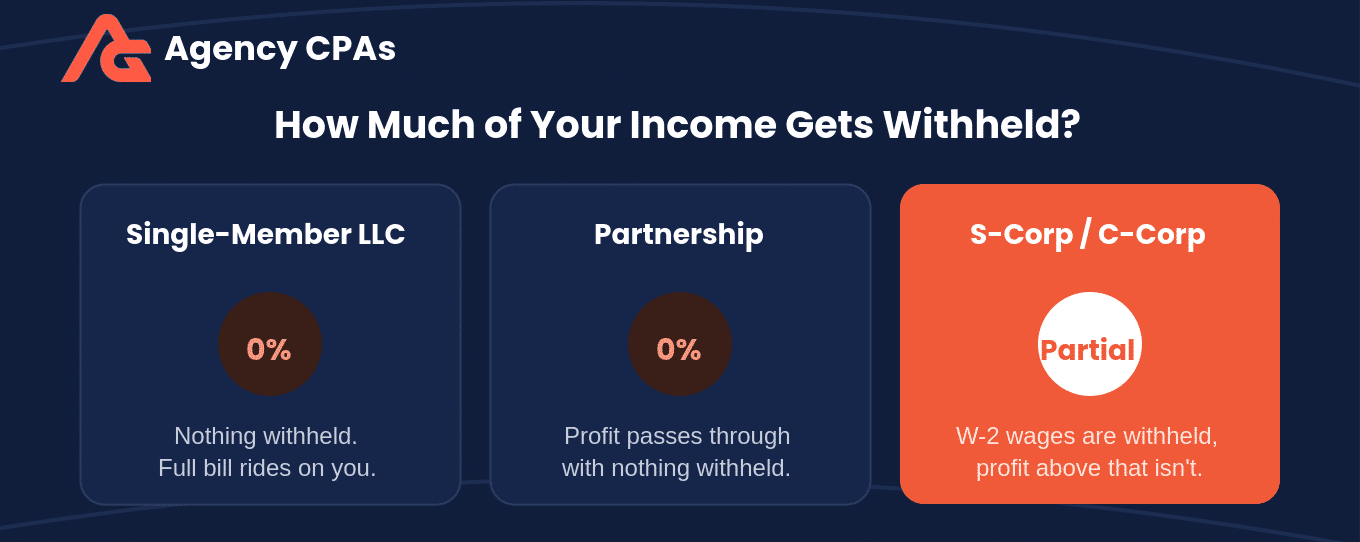
For all of these, the IRS expects you to pay tax on income as you earn it, not just once a year in April. Estimated payments are how that happens outside of payroll withholding.
The Two Ways People Get This Wrong
Underpaying. This is the more common and more expensive mistake. If you don’t pay enough throughout the year, you’re not just facing a bigger bill next April; you’re also facing an underpayment penalty, which is essentially interest the IRS charges for holding onto money it thinks you owed earlier.
Overpaying. Less painful, but still a mistake. Some people pad their estimates out of caution and end up giving the IRS an interest-free loan for a year when that cash could have been working for them, paying down debt, sitting in an investment account, or covering payroll.
Both come from the same root cause: guessing instead of calculating.
The Safe Harbor Numbers
The IRS won’t charge an underpayment penalty if your total payments for the year meet one of these thresholds.
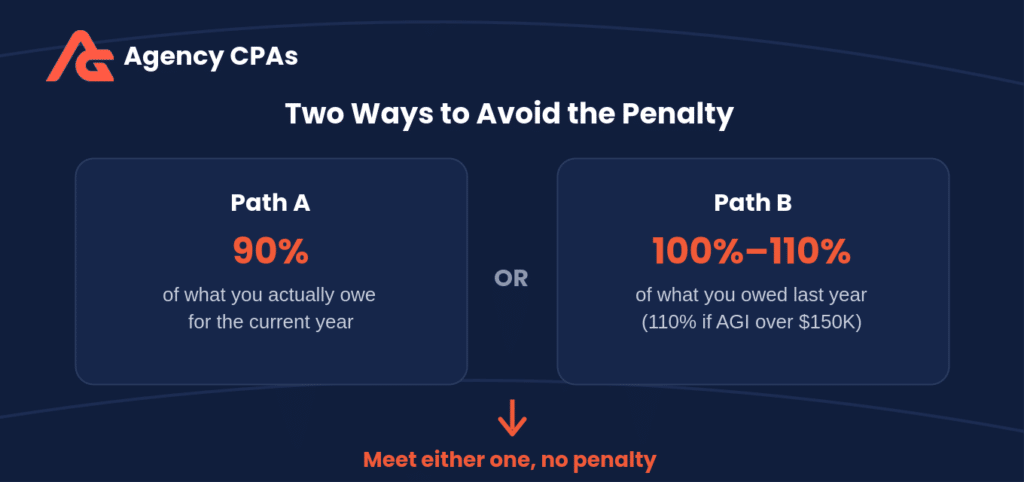
Here’s what that looks like in practice: if your total tax liability last year was $60,000 and your AGI was under $150,000, paying at least $60,000 in total estimated payments this year protects you from a penalty, even if you end up owing more in April because this year was more profitable.
What “On track” Actually Looks Like
Being confident in your estimated tax payments means you can answer three questions:
- Is my total estimated payment for the year based on this year’s actual income, not last year’s?
- Am I meeting one of the IRS safe harbor thresholds that protects me from a penalty even if I still owe money in April?
- Have I accounted for state estimated taxes separately, if my state requires them?
If you can’t answer all three with confidence, there’s a decent chance you’re either overpaying, underpaying, or exposed to a penalty you didn’t know was coming.
What To Do Before the 15th
The good news: there’s still time to get this right for Q3. A quick review of year-to-date income against what’s already been paid in is usually enough to tell whether your next payment needs to go up, down, or stay the same, and it takes a lot less time than sorting it out after the fact next April. This is the same kind of periodic check-in that keeps your books and your tax position in sync all year, not just at deadlines.
Common Questions
What if I missed a previous quarter’s payment? Pay what you can as soon as possible. The penalty is calculated per period, so catching up now stops it from growing further. It won’t erase the earlier shortfall, but it limits the damage.
Do I still need to pay if I expect a refund? If your withholding and prior payments already meet a safe harbor threshold, an additional Q3 payment may not be necessary. This is exactly the kind of thing worth confirming rather than assuming.
What happens if I’m a few weeks late? The penalty accrues daily from the due date, so a short delay is inexpensive relative to skipping the payment entirely. Still, paying by the 15th avoids it altogether.
Want a Second Set of Eyes Before the Deadline?
If you want a second set of eyes on your number before the deadline, that’s exactly the kind of thing we’re happy to help with. We’ll compare year-to-date income against what’s already been paid in and tell you whether your Q3 payment needs to move.
Get in touch and we’ll take a look.