Most agencies we work with are running on thin cash reserves. Not because they aren’t profitable, many of them are. The money just comes in, goes back out, and there’s never a clear line between operating cash and an actual safety margin. That’s a problem waiting to surface at the worst possible time.
Why Two Months Is the Number
Two months of operating expenses is the baseline cash reserve every agency should hold. Not one month. A single slow quarter can wipe that out. Not six months. That’s capital sitting idle when it could be working harder. Two months gives you enough runway to survive a client loss, a slow invoicing stretch, or an unexpected expense without going into crisis mode.
The number is different for every agency. Take your average monthly operating costs: payroll, software, rent, contractor payments, debt service. Multiply by two. That’s your target. Write it down. Know it.
Here’s what that looks like in practice. Say your agency runs the following monthly costs:
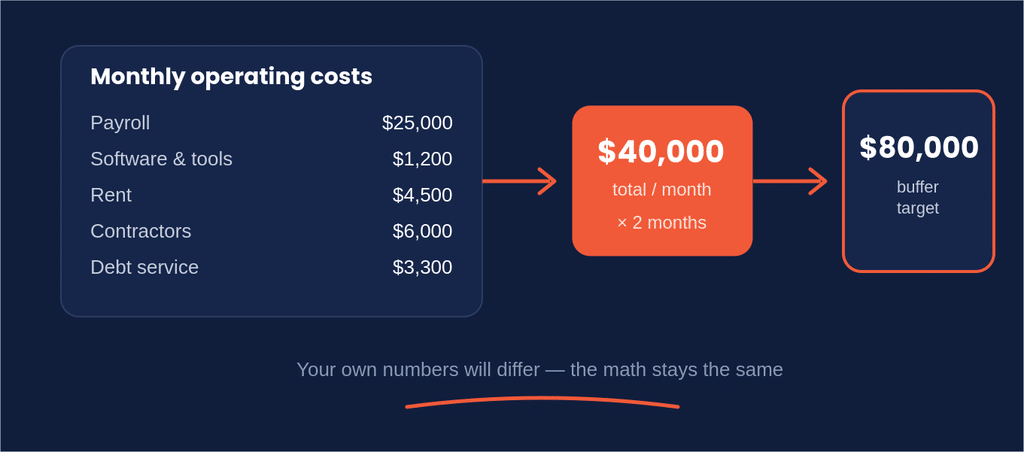
That’s $40,000 a month in operating costs, which puts your two-month cash buffer target at $80,000. That’s the number to write down and build toward.
Where to Keep it
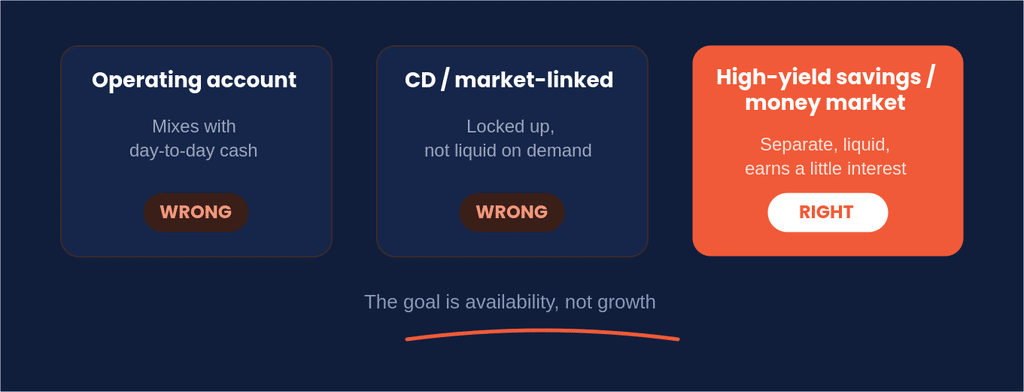
Your cash reserve should not be in your operating account. When it’s in the same place as your day-to-day cash, it disappears. You spend it, lend it to a slow month, or confuse it with available cash.
Keep it somewhere separate: a high-yield savings account or money market account that earns a little interest but stays fully liquid. Market-linked accounts and CDs with lock-up periods are the wrong answer. This is not an investment. You’re not trying to grow it. You’re trying to make sure it’s there when you need it.
How to Build It Without Feeling the Pain
If you’re starting close to zero, build toward the target systematically. Pick a percentage of revenue five to ten percent, and move it into the reserve account automatically every month. Treat it like a fixed expense. Once you hit the target, you maintain it. If you draw it down, rebuilding it comes before anything discretionary.
The agencies that handle rough patches without drama almost always have a reserve in place. The ones that don’t are perpetually managing cash instead of running the business. Two months isn’t a magic number, but it’s the right neighborhood.
Common Questions
What if my revenue is inconsistent month to month? Use a trailing 6 or 12-month average for your operating costs rather than a single month, so seasonal swings don’t throw off your target.
Should the reserve include taxes I owe? No, tax reserves should be tracked and held separately. Mixing the two makes it hard to know if you’re actually covered on either front. If you’re not sure your tax strategy already accounts for this, that’s worth a separate conversation.
What if I draw the reserve down for a real emergency? That’s what it’s there for. The discipline is in rebuilding it afterward before resuming discretionary spending.
Not Sure What Your Number Should Be?
If you don’t know your current runway, or you’re not sure whether your reserve is sitting in the right place, we’ll calculate it with you in 15 minutes.
Get in touch and we’ll take a look.